
Description
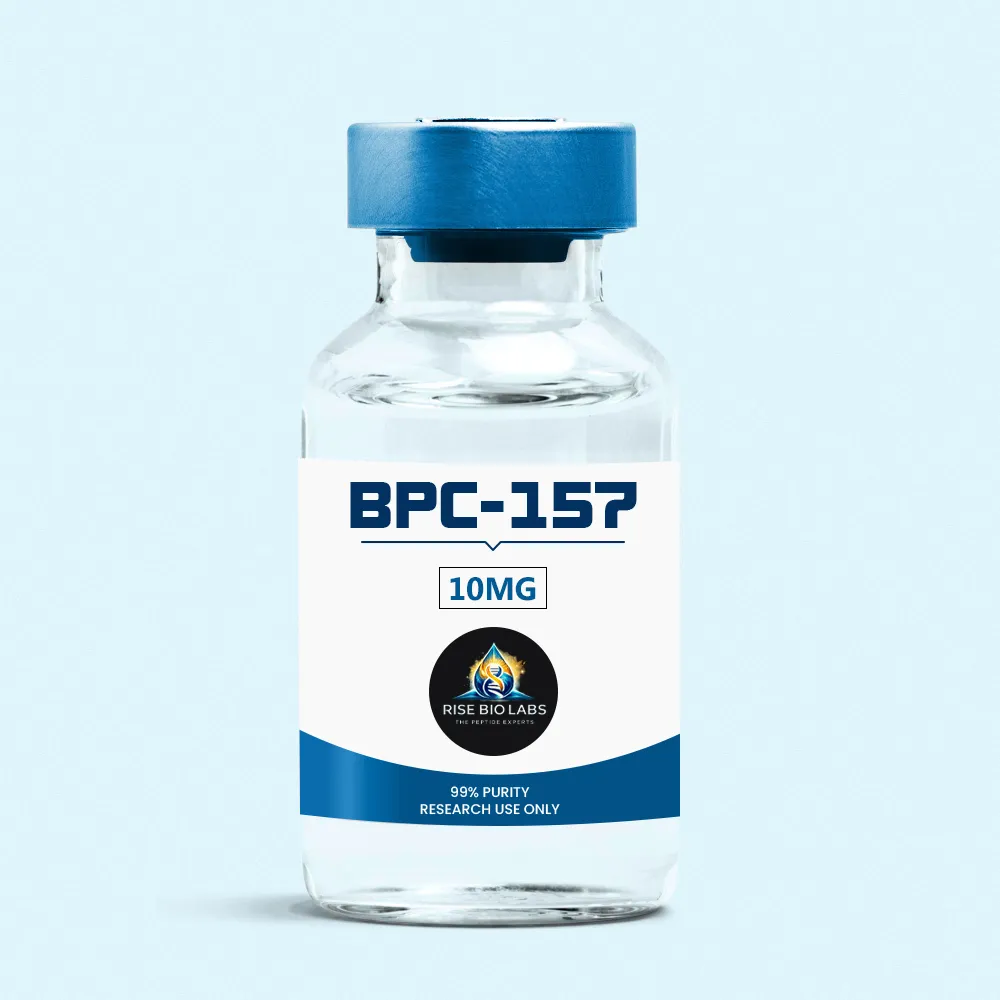
BPC-157 (Body Protection Compound-157) is a synthetic pentadecapeptide consisting of a 15-amino acid sequence. In biochemical and cellular biology research, BPC-157 is widely studied in experimental models for its unique molecular structure and potential interactions with cellular signaling pathways, growth factor expression, and tissue repair mechanisms in non-clinical environments.
Rise BioLabs supplies this specialized peptide in an ultra-pure, crystalline lyophilized format to preserve maximal chemical stability and shelf-life during transit and storage. Every batch undergoes rigorous quality control protocols to guarantee premium parameters for advanced scientific study.
Technical Specifications
-
Peptide Name: BPC-157
-
Total Content: 10mg per vial
-
Physical Appearance: Lyophilized powder
-
Purity Profile: $\ge 99\%$ (Certificate of Analysis available upon request)
-
Manufacturing Standard: Produced in a GMP-Certified Facility
-
Target Applications: In vitro cellular assays, structural signaling evaluation, and pathway modeling.
Storage and Handling Protocols
To safeguard the chemical integrity of the peptide and prevent premature degradation, adhere to the following laboratory storage protocols:
-
Pre-Reconstitution: Store in a cool, dry, and dark environment. The lyophilized state allows the peptide to remain fully stable at ambient temperatures during standard shipping.
-
Post-Reconstitution (Liquid State): Once mixed into solution, store consistently in a laboratory refrigerator between 2°C – 8°C and utilize within 30 days for optimal efficacy.
-
Extended Storage: For long-term preservation and maximum stability, store frozen at -20°C or lower. Avoid frequent freeze-thaw cycles to prevent structural degradation.
Research Use Disclaimer
This product is supplied exclusively to qualified professionals for in vitro laboratory research and development purposes only. It is not approved, authorized, or intended for human clinical applications, medical diagnostics, dietary supplementation, or veterinary use. All handling must be conducted strictly within certified, non-clinical laboratory environments using appropriate personal protective equipment (PPE).




Reviews
There are no reviews yet.